Asset Leasing
Over 100 Leases - You need a system
Have over 100 leases? Experts say you need a leasing system for compliance to IFRS 16. Data collection and reporting are too complex to be done in...
Discover how leasing extends asset life, improves utilisation, and unlocks balance sheet value for tech and equipment that is often retired too early.
Leaders often say they want to “be more circular”. Then they look at their balance sheet and see a wall of owned, under‑utilised technology and equipment inching towards retirement or obsolescence.
The gap between circular ambition and the reality of actually owning assets is where leasing can change how your business operates.
Most circular economy definitions focus on materials or consumer products, not high‑value assets like construction and manufacturing machinery or data centre equipment. Yet the principles are the same: design out the waste, keep products in use at their highest value, and regenerate resources rather than depleting them.
In practice, this means extending asset life through reuse, refurbishment, and redeployment, and only recovering materials when all productive use cycles have been exhausted.
High‑value assets such as medical equipment, industrial machinery, and technology fleets are prime candidates. They hold significant embodied carbon and capital, but in a traditional “buy and depreciate” model they are often retired early, written off, and replaced long before their true technical end of life. That is the linear economy in action: take, make, dispose, repeat.
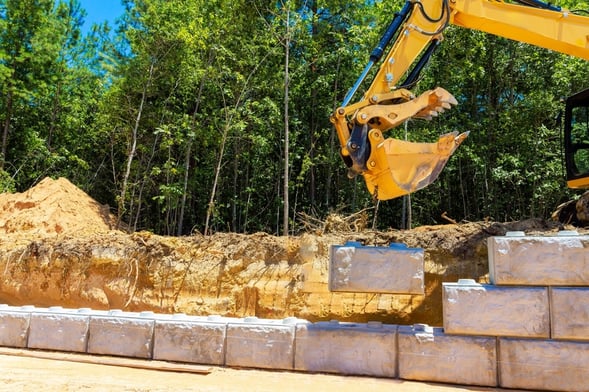
High-value equipment and machinery is often retired or written off long befor the end of their actual useful life.
The circular economy principles inherest to leasing change that approach.
True circularity depends on what happens over multiple lifecycles, not just one. When you own assets outright, several structural barriers appear:
The result is lost value and unnecessary waste.
By contrast, leasing, sharing, reusing, and repairing are the core mechanisms for a circular economy, because they keep products and materials in use for longer and at higher value.
Circular finance structures reposition high‑value assets as a managed service rather than a one‑off purchase. This shift does three important jobs:
It aligns incentives. Lessors have a direct stake in extending the asset’s life, retaining its condition, and placing it into second and even third use cycles to preserve residual value. That encourages design choices, maintenance programmes, and remarketing channels that support refurbish, reuse, and final material recovery instead of disposal.
It increases utilisation. Research on circular business models shows that leasing and 'Product‑as‑a‑Service' arrangements can significantly raise asset utilisation and loop products through additional use cycles, creating more economic output from the same physical stock. That translates into lower unit costs, reduced demand for virgin materials, and a smaller emissions footprint per unit of service delivered.
It unlocks better data. Circular economy studies from the Ellen MacArthur Foundation point to digital asset tracking as critical to enabling reuse, redeployment, and end‑of‑life recovery. Leasing programmes are natural homes for that telemetry and governance, providing the audit trail needed to support ESG reporting, procurement decisions, and regulatory disclosures.
The World Economic Forum’s work on intelligent assets finds that circular models which extend use cycles, raise utilisation, and loop assets through additional users can decouple growth from resource consumption while creating substantial economic upside.
For asset‑intensive industries, the question has already become 'how can you operationalise circularity within existing capital and procurement frameworks?'. A practical path often starts with:
The circular economy stops being an abstract sustainability ambition when you wire it directly into how assets are financed, managed, and reported. A tailored leasing solution through Quadrent is a powerful tool that turns high‑value assets from a linear cost into a regenerative, data‑rich, and future‑fit part of your strategy.
Have over 100 leases? Experts say you need a leasing system for compliance to IFRS 16. Data collection and reporting are too complex to be done in...
Greenplate and Quadrent have come together to provide a new, exciting and cost effective way for councils to upgrade BBQ equipment for community use.
Lease Optimisation Information System (LOIS) is a leading innovation in lease portfolio management. Learn about how it can help you with IFRS...